Dead Man’s Hand: The True Story of Wild Bill Hickok
The Legend of Wild Bill Hickok
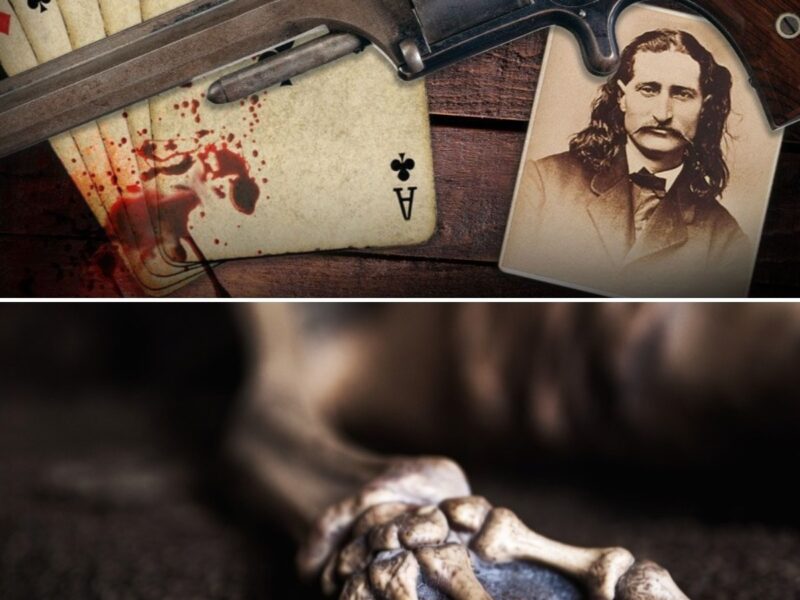
Few names associated with the Old West are as recognizable as Wild Bill Hickok, and for good reason; in many ways, Wild Bill was the quintessential Westerner of the latter 19th century. He was a wagon master, scout, soldier, spy, lawman, gambler, actor, and, yeah, a gunfighter; a man capable of extraordinary feats of daring and bravery, yet courteous and soft-spoken when left alone and kind to children. He was one of the few frontiersmen who was willing to take his guns off and go toe-to-toe with anyone looking for a fight; but also a man who, even by generous accounts, was a bit too quick when it came to pulling a trigger.
He could cuss like a sailor, consorted with ladies of ill-repute, and would rather gamble than eat. Hickok was friends with other notable frontiersmen like Buffalo Bill Cody, General George Armstrong Custer, Kit Carson, and Calamity Jane; and he inspired future legends of law enforcement like US Marshall Bill Tilman and countless others. A celebrity in his own time, Hickok continues to tickle the imagination of millions; from the early silent film era until now, everybody from Gary Cooper, Charles Bronson, Jeff Bridges, Sam Elliot, and Keith Carradine have portrayed this icon on the big screen.
Fact vs. Fiction: The Early Years
But who was Hickok really? What sort of man was he? As with many notorious characters of the Old West, much of the legend is built on exaggerated claims and outright lies; fortunately, in Hickok’s case, the truth is even more fascinating than fiction.
James Butler Hickok was brought into this world on May 27th, 1839, in Homer, Illinois. A farm family by trade, his father William Alonzo and mother Polly Butler were also ardently anti-slavery; even to the point of opening up their home to the Underground Railroad. When the senior Hickok wasn’t hiding runaway slaves in the family cellar, he would take part in nighttime rides, whisking refugees from one safe house to another; dangerous actions that young James and his brothers would occasionally take part in as well.
Spreading His Wings
By the age of 17, James Butler was itching to spread his wings. His older brother Oliver had already headed west to California, and Hickok thought maybe he’d join him; after all, there was a big exciting world out there awaiting, and this was the height of the California Gold Rush. He eventually headed for Kansas, arriving at Leavenworth and later finding his way to Monticello.
It wasn’t long before Hickok became associated with James Henry Lane and his Free State movement. This was the era known as Bleeding Kansas, where pro and anti-slavery factions clashed violently; between 1854 and 1859 alone, there were at least 56 documented political killings. Hickok, accurate as ever with a firearm, was recruited into the “Jayhawkers” militia, possibly serving as Lane’s personal bodyguard.
The Rock Creek Incident
Hickok eventually took up light duty at Rock Creek Station in Nebraska after a brutal encounter with a bear (a story often exaggerated by biographers). It was here on July 12th, 1861, that he shot David McCanless dead.
The accounts of this fight vary wildly. Hickok’s own version, told to journalist George Ward Nichols, claimed he took on ten armed outlaws alone; firing his rifle, then his pistol, before finally using a knife in a “Berserker mode” to finish them off. However, the likely truth is more complicated; involving a debt dispute between McCanless and the station manager, and a possible romantic entanglement with McCanless’s mistress.
Whether it was murder or self-defense remains one of the great debates of the Old West. Regardless, the trial collapsed, and as the Civil War began, Hickok headed straight into the history books.